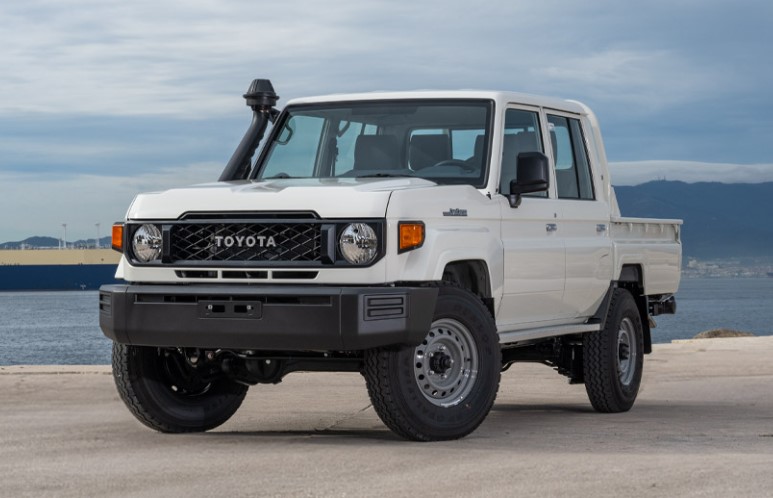
For many, the mention of a Toyota Land Cruiser conjures images of unyielding reliability and unparalleled off-road prowess, and nowhere is this truer than with the legendary 70 Series, particularly when considering a HZJ79 Overlanding setup. This iconic vehicle, like the 2001 Toyota Land Cruiser Double Cab HZJ79 featured recently, represents the pinnacle of what many dream of for global exploration and rugged adventure. Indeed, for those who seek to push boundaries and explore the world’s most remote corners, the HZJ79 is more than just a truck; it’s a trusted companion, a mobile basecamp, and often, a positively life-changing investment.
My own journey into the world of overland travel truly began to flourish with the acquisition of a 70 Series Land Cruiser. It wasn’t merely a vehicle purchase; it was an embrace of a philosophy—a commitment to simplicity, robustness, and the freedom to roam without concern for the delicate complexities of modern machinery. The allure of the 70 Series, with its reputation for being utterly bomb-proof and globally recognized, resonated deeply with my desire for truly self-sufficient exploration. The HZJ79 Double Cab, in particular, combines the legendary reliability of the 70 Series with the practical advantage of expanded passenger and secure storage capacity, making it an almost mythical beast in the overlanding community.
The Undeniable Appeal of the Toyota 70 Series
To understand the magic of the HZJ79, one must first grasp the enduring legacy of the Toyota 70 Series Land Cruiser. Introduced in 1984, the 70 Series was designed as a heavy-duty, off-road workhorse, replacing the venerable 40 Series. Its mission was clear: provide uncompromising reliability and capability in the world’s harshest environments. From the Australian outback to the African savanna, and the treacherous passes of the Andes, the 70 Series quickly earned its stripes, becoming the vehicle of choice for aid organizations, mining companies, farmers, and, of course, intrepid adventurers.
What sets the 70 Series apart, even decades later, is its fundamental design philosophy: Keep it simple, keep it strong. While modern 4x4s are laden with sophisticated electronics, independent suspensions, and luxurious interiors, the 70 Series maintains a rugged, utilitarian approach. Solid axles, leaf springs (or robust coil springs on certain variants), a ladder frame chassis, and manual controls define its character. This simplicity translates directly into dependability. Fewer complex systems mean fewer things to break, and when something does go wrong, it’s often more straightforward to diagnose and repair, even in the remotest of locations with basic tools.
Why the HZJ79 Double Cab is an Overlanding Icon
The 2001 Toyota Land Cruiser Double Cab HZJ79 is a specific, highly coveted variant within the 70 Series lineage. The ‘H’ denotes the engine type (the legendary 1HZ diesel), ‘ZJ’ refers to the chassis/body style, and ’79’ signifies the long-wheelbase single or double cab pickup truck. The “Double Cab” configuration is what truly elevates the HZJ79 for overlanding, offering a unique blend of practicality and legendary toughness.
The Heartbeat: The 1HZ Diesel Engine
At the core of the HZJ79’s reputation lies its engine: the naturally aspirated 4.2-liter 1HZ diesel. This inline-six behemoth is perhaps the most celebrated diesel engine in overlanding history. It’s not known for blistering speed or massive horsepower (typically around 130 hp), but for its almost mythical reliability and longevity. Here’s why it’s an overlander’s dream:
- Mechanical Simplicity: No common rail, no complex electronic fuel injection, no variable geometry turbos, no DPFs. It’s an indirect injection mechanical marvel that can run on a wider variety of diesel fuels, crucial when venturing into areas with questionable fuel quality.
- Durability: These engines are known to regularly achieve 500,000 to 1,000,000 kilometers with proper maintenance. They are built for sustained, heavy-duty use.
- Torque: While horsepower is modest, the 1HZ delivers substantial low-end torque, essential for crawling over obstacles, pulling heavy loads, and maintaining momentum in soft sand or mud.
- Ease of Repair: With basic tools and a good service manual, many common issues can be addressed by a knowledgeable owner or local mechanic, even in remote villages.
While some might desire more power for highway cruising, true overlanders prioritize reliability over speed. The 1HZ encourages a slower, more deliberate pace, which aligns perfectly with the ethos of exploration and appreciating the journey.
The Backbone: Chassis, Suspension, and Drive Train
The HZJ79 is built on a heavy-duty ladder frame chassis, renowned for its strength and resistance to twisting. This robust foundation is essential for carrying heavy expedition loads over corrugated roads and uneven terrain for extended periods. The suspension typically features solid axles front and rear, often with leaf springs at both ends or coils up front on some variants, providing incredible articulation and durability. Aftermarket support for suspension upgrades is vast, allowing owners to tailor the ride height, load capacity, and damping characteristics to their specific overlanding needs, whether it’s carrying a heavy slide-on camper or navigating technical trails.
- Solid Axles: Offer superior strength and articulation compared to independent setups, particularly under extreme loads and challenging terrain.
- Manual Hubs & Transfer Case: Often equipped with manual locking hubs and a manually engaged high/low range transfer case, further enhancing simplicity and control.
- Differential Locks: Many HZJ79s come equipped with factory front and rear differential locks, providing ultimate traction when the going gets truly tough – a game-changer for serious off-road capability.
The Double Cab Advantage for Overlanding
The double cab configuration is a significant differentiator. While the single cab offers maximum tray space, the double cab provides a second row of seating, allowing for more passengers (family, friends, or local guides) or secure, weatherproof internal storage for sensitive gear. This versatility is invaluable for:
- Family Expeditions: Comfortably seating four or five people for extended trips.
- Secure Storage: Valuable electronics, camera gear, and documents can be kept safe inside the cabin, away from dust, rain, and prying eyes, rather than exposed on the open tray.
- Expanded Comfort: On long drives, the extra space allows for more comfortable seating positions, which is crucial for reducing fatigue.
The rear tray, though shorter than a single cab, is still incredibly versatile. It’s perfect for mounting custom canopies, pop-top campers, or simply carrying bulky items like firewood, recovery boards, and extra fuel/water jerry cans. The combination creates a highly adaptable platform.
Transforming the HZJ79 into a Global Explorer
While the HZJ79 is supremely capable in stock form, most serious overlanders will undertake a range of modifications to optimize it for their specific adventures. These aren’t about adding flashy aesthetics, but about enhancing functionality, self-sufficiency, and safety.
- Suspension Upgrade: A common first modification. Heavy-duty springs and shock absorbers from brands like Old Man Emu, Dobinsons, or Iron Man are essential to handle the increased weight of fuel, water, gear, and accessories, while also improving ride quality and ground clearance.
- Long-Range Fuel Tanks: Stock tanks are good, but extended range tanks (often dual tanks totaling 180-200+ liters) provide peace of mind in areas with limited fuel infrastructure.
- Water Storage: Integrated water tanks (50-100 liters) with a pump and filtration system are critical for multi-day excursions.
- Recovery Gear: A robust front bumper with a winch (e.g., Warn, ComeUp), recovery points, snatch straps, tree trunk protectors, and traction boards are non-negotiable for self-sufficiency.
- Communication & Navigation: Satellite phones, UHF/VHF radios, and reliable GPS systems (like Garmin Overlander or dedicated tablets with offline maps) are vital for safety and navigation off-grid.
- Electrical System Upgrades: A dual battery system, solar panels, and a robust inverter are necessary to power fridges, charging devices, and camp lighting without draining the starting battery.
- Canopy/Camper Integration: Many HZJ79 owners opt for a custom aluminum canopy, often with integrated storage, a kitchen setup, and even a rooftop tent or pop-top camper, transforming the vehicle into a true mobile home.
The Overlanding Lifestyle: More Than Just a Vehicle
The sentiment from the Expedition Portal classifieds — “ownership has been positively life-changing,” and “dream overland rig” — perfectly encapsulates the profound impact a vehicle like the HZJ79 can have. It’s not just about getting from point A to point B; it’s about the journey itself, the challenges overcome, and the unparalleled freedom it unlocks.
An HZJ79 encourages a certain kind of travel: deliberate, resilient, and deeply connected to the environment. It allows you to venture far beyond paved roads and crowded tourist traps, opening up access to wild landscapes and authentic cultural experiences. It demands attention and respect, but in return, it offers unwavering reliability and the confidence to tackle almost anything the road (or lack thereof) throws at you.
Owning an HZJ79 is also an entry into a global community. Whether you’re in Patagonia, the Sahara, or the Kimberley, you’ll encounter fellow 70 Series enthusiasts and mechanics who understand and appreciate these vehicles. This network of support and shared passion is an invaluable aspect of the overlanding lifestyle.
Making the Investment: What to Look For
Because of their robust nature and global demand, HZJ79s hold their value exceptionally well. They are an investment, not just in a vehicle, but in a lifestyle. If you’re considering purchasing one, here are a few expert tips:
- Rust Inspection: Thoroughly inspect the chassis, body panels, and common rust traps (e.g., footwells, sills, underneath the bed) – especially if the vehicle has been exposed to coastal or salty environments.
- Maintenance History: A comprehensive service history is crucial. Look for evidence of regular oil changes, filter replacements, and differential/gearbox oil services. The 1HZ engine, while tough, thrives on good maintenance.
- Pre-Purchase Inspection: If possible, have a specialist Land Cruiser mechanic conduct a pre-purchase inspection. They can identify potential issues that might not be obvious to the untrained eye.
- Modifications: Assess the quality of any aftermarket modifications. Well-executed upgrades add value; poorly installed ones can be a headache. Prioritize vehicles with quality suspension, robust recovery gear, and well-designed electrical systems.
- Spares: Inquire about what spares come with the vehicle. A good selection of filters, belts, and common wear items can save a lot of hassle on the road.
The Enduring Legacy of True Adventure
In a world increasingly dominated by complex, disposable technology, the 2001 Toyota Land Cruiser Double Cab HZJ79 stands as a powerful testament to the enduring appeal of mechanical simplicity and brute-force reliability. It’s a vehicle that doesn’t just transport you; it transforms your journey, fosters self-reliance, and deepens your connection to the world around you. For those who dream of vast open spaces, challenging trails, and the freedom of the open road, the HZJ79 Overlanding setup isn’t just a choice; it’s a calling, a legend waiting to carry you to your next grand adventure. It has surpassed all expectations for many, becoming the ultimate partner in the quest for global exploration.