Alright, fellow adventurers, let’s talk solo camping. There’s a profound beauty in it, isn’t there? Just you, your pack, and the raw, untamed wilderness. No distractions, no compromises, just pure, unadulterated freedom. But with that freedom comes a unique set of responsibilities. When you’re out there on your own, you are your own first responder, your own medic, your own navigator, and your own problem-solver. There’s no one else to lean on when things go sideways. And trust me, after decades of strapping on a pack and heading into the backcountry alone, things can and sometimes do go sideways.
That’s why at WildRigged, we preach preparation. It’s not about fear-mongering; it’s about empowerment. It’s about giving you the confidence and the competence to tackle whatever the wilderness throws your way, so you can truly enjoy the solitude without a nagging sense of dread. This isn’t just a checklist; it’s a deep dive into the essential survival skills every solo camper needs to not just survive, but thrive, out there on their own. Let’s get rigged up, shall we?
The Unshakeable Foundation: Navigation & Route Planning
Getting lost is probably the number one fear for solo campers, and for good reason. It’s disorienting, dangerous, and mentally taxing. Your ability to navigate accurately is non-negotiable.
Mastering Map & Compass
- The Basics are Best: Forget fancy gadgets for a second. Can you read a topographical map? Do you understand contour lines, declination, and how to orient your map to the terrain? Can you take a bearing with a compass and follow it? These are foundational. I’ve seen too many folks rely solely on their phone, only to have the battery die or the signal vanish.
- Practice, Practice, Practice: Don’t wait for an emergency to try this out. Take local hikes, practice navigating off-trail in familiar areas. Learn to identify landmarks and correlate them with your map.
- Always Have a Physical Map: Even if you’re rocking a top-tier GPS unit, a laminated physical map of your area and a reliable compass are your absolute last resort. They don’t run on batteries.
GPS & Digital Tools (with a Caveat)
- Redundancy is Key: A dedicated GPS device or a reliable GPS app on your smartphone (with downloaded offline maps!) can be incredibly useful. But they are tools, not crutches. Always carry a power bank or spare batteries.
- Know Your Waypoints: Before you even leave, mark your intended route, potential bail-out points, water sources, and emergency shelters on your GPS.
Building Resilience: Shelter Building & Emergency Shelter
Exposure to the elements – be it freezing temperatures, driving rain, or scorching sun – can quickly become a life-threatening situation. Knowing how to create a protective barrier between you and the environment is paramount.
Your Primary Shelter: Tent/Tarp Setup Skills
- Site Selection: This is critical. Look for level ground, away from potential rockfall, dead trees (widowmakers!), and flash flood zones. Consider wind direction and natural windbreaks. I once set up too close to a riverbed during a surprise downpour; learned that lesson the hard way.
- Efficient Pitching: Can you pitch your tent or tarp quickly and securely in the dark, or in adverse weather? Practice in your backyard. Know every guy line, every stake point.
Emergency Improvised Shelters
- Natural Shelters: Learn to identify natural shelters like rock overhangs or dense evergreens. Understand how to enhance them with natural debris.
- Debris Huts & Lean-tos: If you have nothing else, knowing how to construct a simple lean-to or a more robust debris hut using branches, leaves, and other natural materials can save your life. The goal is insulation and protection from wind and precipitation.
The Warmth of Life: Fire Craft
Fire is more than just warmth; it’s a morale booster, a way to purify water, cook food, signal for help, and deter critters. Being able to reliably make fire is a cornerstone of solo survival.
Multiple Ignition Sources
- Redundancy, Again: Carry at least three reliable ignition sources. Waterproof matches in a sealed container, a good ferro rod, and a reliable lighter (or two) are my go-to. Keep them accessible and protected.
- Practice with Each: Can you get a fire going with a ferro rod when your hands are cold and wet? It’s a different skill than flicking a Bic.
Tinder, Kindling, and Fuel
- The Fire Triangle: You need fuel, oxygen, and heat. The hardest part is often getting the initial flame to catch.
- Tinder is King: Learn to identify and gather good natural tinder: birch bark, dried grasses, cottonwood fluff, pine needles, fatwood. Always carry some emergency tinder like cotton balls soaked in petroleum jelly or commercial firestarters.
- Progressive Fueling: Start with fine tinder, move to pencil-lead-sized kindling, then thumb-sized, then wrist-sized, gradually building your fire. Don’t smother it.
Staying Hydrated: Water Procurement & Purification
You can go weeks without food, but only days without water. Dehydration rapidly impairs judgment and physical ability, making other survival tasks exponentially harder.
Finding Water Sources
- Maps and Observation: Identify potential water sources on your map. In the field, look for green vegetation, follow animal trails (they often lead to water), and listen for running water.
- Rain & Dew Collection: If primary sources are scarce, know how to collect rainwater with a tarp or a poncho, or even dew from plants.
Purification Methods
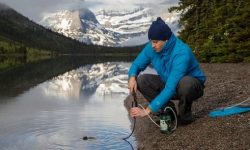
- Filtration: A quality water filter (like a Sawyer Squeeze or Katadyn BeFree) is a solo camper’s best friend. They’re fast and effective. Carry a backup.
- Boiling: This is the most reliable method. Bring water to a rolling boil for at least one minute (longer at higher altitudes).
- Chemical Treatment: Iodine tablets or chlorine dioxide drops are lightweight and effective against most pathogens, but take time to work and can leave an aftertaste.
- Solar Still (Last Resort): Know how to construct one, but understand they are slow and yield minimal water.
Your Own Medic: First Aid & Wilderness Medicine
When you’re alone, a minor scrape can become a major infection, and a twisted ankle can become a life-threatening ordeal. A well-stocked first aid kit and the knowledge to use it are non-negotiable.
The Essential First Aid Kit
- Beyond Band-Aids: Your kit needs to be comprehensive. Think wound care (antiseptics, gauze, tape, butterfly closures), pain relief, anti-inflammatories, allergy meds (antihistamines), blister treatment, and any personal medications.
- Trauma Gear: Include a tourniquet and pressure bandages for severe bleeding. Know how to use them.
Basic Wilderness First Aid Skills
- Wound Management: Cleaning, dressing, and recognizing signs of infection.
- Sprains & Fractures: Knowing how to stabilize a limb with a splint.
- Hypothermia & Heatstroke: Recognizing symptoms and administering appropriate care. These are silent killers.
- CPR & Choking: While you can’t perform CPR on yourself, you might encounter someone else, or need to instruct someone. Know the basics.
- The STOP Principle: Stop, Think, Observe, Plan. This isn’t just for getting lost; it applies to medical emergencies too. Don’t panic. Assess the situation calmly.
Calling for Help: Signaling for Rescue
If you’re injured or truly lost and cannot self-rescue, signaling for help becomes your top priority. You need to make yourself visible and audible.
Audible Signals
- Whistle: A simple, pea-less whistle can carry much further than your voice. The international distress signal is three short blasts, repeated.
Visual Signals
- Signal Mirror: Learn how to effectively aim a signal mirror at aircraft or distant search parties. Practice this.
- Fire & Smoke: Three fires in a triangle, or three columns of smoke, are universal distress signals. Build a smoky fire during the day (add green leaves, wet moss) and a bright, visible fire at night.
- Ground-to-Air Signals: Use natural materials to create large, visible symbols on the ground (e.g., a large ‘X’ or ‘SOS’).
- Bright Clothing/Gear: Wear or display brightly colored items that contrast with the environment.
Electronic Devices
- PLB/Satellite Messenger: A Personal Locator Beacon (PLB) or a satellite messenger (like an inReach or Zoleo) is arguably the single most important piece of emergency gear for a solo camper. These devices can send an SOS with your exact coordinates to rescue services, even without cell service. Invest in one, learn how to use it, and keep it charged.
Respecting the Wild: Wildlife Awareness & Protection
You’re entering their home. Understanding local wildlife and how to safely coexist is crucial for your safety and theirs.
Food Storage & Camp Hygiene
- Bear Canisters/Bags: Store all food, scented items, and trash in bear-resistant containers or hung from a bear bag far from your tent.
- Leave No Trace: Pack out all your trash. Don’t leave food scraps.
Encounter Management
- Bears: Know the difference between black bears and grizzlies. Carry bear spray and know how to use it. Make noise on the trail. If encountered, know when to stand your ground, when to back away, and when to play dead (rarely).
- Snakes: Know venomous species in your area. Watch where you step and place your hands. If bitten, stay calm, immobilize the limb, and seek immediate medical attention.
- Other Critters: Be aware of smaller but potentially dangerous animals like raccoons, skunks, and rodents that can carry disease or damage gear.
The Inner Game: Mental Fortitude & Problem Solving
Perhaps the most underrated survival skill is the ability to stay calm, think clearly, and maintain a positive attitude under pressure. Panic is your worst enemy.
Cultivating a Survival Mindset
- Pre-Visualize Scenarios: Before your trip, mentally walk through potential problems (getting lost, injury, bad weather) and how you would respond. This isn’t morbid; it’s proactive.
- Positive Self-Talk: When things get tough, your inner voice can be your greatest ally or your biggest detractor. Focus on solutions, not despair. Remind yourself of your training and capabilities.
- Patience and Persistence: Survival situations are rarely quick fixes. You’ll need to be patient, persistent, and adaptable.
Practical Problem Solving
- The STOP Principle (Again): It’s not just for first aid. When something goes wrong, STOP, THINK, OBSERVE, PLAN. This structured approach prevents rash decisions.
- Prioritization: In a survival situation, you need to prioritize needs: shelter, water, fire, signal. Don’t get distracted by non-essentials.
Gear Selection, Maintenance & Knowing Your Tools
It’s not just about having the right gear; it’s about knowing how to use it, maintain it, and understanding its limitations. Your gear is an extension of your skills.
Quality & Redundancy
- Invest Wisely: Cheap gear often fails when you need it most. Prioritize quality for critical items like your shelter, navigation tools, and first aid kit.
- Multi-Purpose Items: Look for gear that serves multiple functions to save weight and space.
- Backup Systems: Always have backup systems for critical gear (e.g., extra batteries, a second knife, multiple fire starters).
Proficiency & Maintenance
- Know Your Gear Inside Out: Can you set up your stove, repair a tear in your tent, or change a water filter cartridge blindfolded? Practice until you can.
- Regular Maintenance: Clean and inspect your gear after every trip. Sharpen your knife, dry your tent, check battery levels. Don’t wait until you’re in the backcountry to discover a problem.
Pre-Trip Planning & Communication
The best survival skill sometimes is simply not getting into a survival situation in the first place. Thorough planning is your first line of defense.
Detailed Itinerary & Leave-No-Trace Plan
- Share Your Plan: Always, always, ALWAYS leave a detailed itinerary with a trusted friend or family member. Include your route, expected return date, and emergency contact information. Stick to it.
- Weather Check: Monitor weather forecasts meticulously before and during your trip. Be prepared to change plans or bail out if conditions worsen.
- Research Your Area: Understand the terrain, local regulations, potential hazards (e.g., hunting seasons, specific wildlife concerns), and available emergency services.
Communication Protocols
- Check-in System: Establish a check-in system with your emergency contact. If you don’t check in by a certain time, they know to initiate a search.
- Emergency Contacts: Program local emergency numbers (park rangers, sheriff) into your phone, alongside your primary emergency contact.
Frequently Asked Questions (FAQ)
What’s the single most important skill for solo camping?
Honestly, it’s a tie between navigation and mental fortitude. You can have all the gear in the world, but if you can’t find your way or you panic, you’re in deep trouble. Navigation prevents you from getting lost, and mental resilience helps you think clearly and act decisively if you do. They’re symbiotic.
How much water should I carry for a solo trip?
This depends heavily on the duration, climate, and availability of water sources. As a general rule, aim for at least 1 liter per person for every 2-3 hours of strenuous activity in moderate conditions. In hot, dry climates, double that. More importantly, know your water sources on your route and carry a reliable filter/purifier to replenish your supply. Never rely on finding water without a purification method.
What kind of emergency communication device is best for solo campers?
For solo campers, a Personal Locator Beacon (PLB) or a satellite messenger (like a Garmin inReach or Zoleo) is unequivocally the best choice. Unlike cell phones, these devices work globally, even without cell service, to send an SOS with your exact GPS coordinates to emergency services. Some satellite messengers also allow two-way text communication, which can be invaluable for non-emergency updates or coordinating with rescue teams.
How do I practice these survival skills safely?
Start small and local. Practice map and compass skills on familiar trails. Set up your tent blindfolded in your backyard. Build a small fire in a controlled environment. Take a basic wilderness first aid course. The key is to gradually increase the complexity and remoteness of your practice, always telling someone where you’re going and when you expect to return. Never try a completely new, high-risk skill for the first time when you’re truly alone and far from help.
What if I encounter a bear while solo camping?
First, prevention is key: proper food storage, making noise on the trail. If you encounter a bear: remain calm. For black bears, make yourself look big, make noise, and slowly back away. If a black bear attacks, fight back aggressively. For grizzly bears, speak softly, slowly back away, and avoid eye contact. If a grizzly charges, and you know it’s a defensive attack, play dead (lie on your stomach, hands behind your neck). Always carry bear spray, know how to use it, and have it readily accessible.
The WildRigged Ethos: Prepared, Confident, Free
Venturing into the wilderness alone is one of life’s great experiences. It strips away the superficial and connects you to something primal and profound. But that connection comes with a responsibility to yourself. These essential survival skills aren’t just about avoiding disaster; they’re about building an unshakeable confidence that allows you to fully immerse yourself in the experience. They allow you to be present, to observe, to truly feel the wilderness, knowing that you have the knowledge and capability to handle whatever comes your way.
So, get out there. Practice these skills. Push your boundaries responsibly. And remember, the wild is an incredible teacher, but it demands respect and preparation. Be rigged for anything, and you’ll find true freedom in the solitude. Stay safe out there, and I’ll see you on the trail.