If you are building an overlanding rig in 2026, you will eventually hit the most divisive fork in the road: Where are you going to sleep?
Walk through any overland expo or scroll through any off-road forum, and you will see two fiercely loyal camps. On one side, you have the Roof Top Tent (RTT) enthusiasts who love sleeping high above the ground. On the other side, you have the Truck Bed Cap (Topper/Canopy) purists who prefer the security of a hard-sided shell.
Both setups require a significant financial investment, and both fundamentally change how you interact with your truck on the trail. If you are struggling with the “roof top tent vs truck bed cap” debate, the WildRigged team has broken down the pros, cons, and hidden realities of both systems to help you build the ultimate rig.
The Case for the Roof Top Tent (RTT)
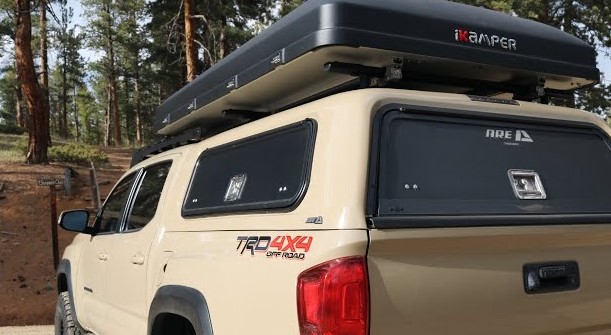
Roof Top Tents have exploded in popularity. Whether you choose a soft-shell fold-out tent or a sleek aluminum hard-shell, an RTT transforms any vehicle into a mobile treehouse.
The Pros of an RTT:
- The View and the Breeze: Sleeping six feet off the ground provides incredible views of your surroundings. In the summer heat, unzipping all four windows of an RTT creates a cross-breeze that a truck bed simply cannot match.
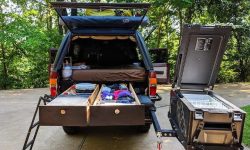
- Separation of Space: When your bed is on the roof, your entire truck bed is freed up for gear. You can pack massive 12V fridges, sliding drawer systems, and bulky recovery gear without ever having to move it to go to sleep.
- The “Cool” Factor: Let’s be honest, an RTT looks incredibly rugged and adventurous. It is the defining visual characteristic of a modern overlanding rig.
The Cons of an RTT:
- Aerodynamics and MPG: A 150lb brick on your roof destroys your fuel economy and creates terrible wind noise on the highway.
- Zero Stealth: You cannot deploy an RTT in a Walmart parking lot or a quiet residential street without attracting everyone’s attention. Stealth camping is impossible.
- The Midnight Bathroom Run: Climbing down a freezing, wet metal ladder at 3:00 AM to use the bathroom is the worst part of RTT ownership.
The Case for the Truck Bed Cap (Topper/Canopy)
Sleeping inside the bed of your truck under a fiberglass or aluminum cap is the traditional, old-school way to overland. With a simple DIY wooden platform, it turns your truck into a micro-RV.
The Pros of a Truck Bed Cap:
- Ultimate Stealth: A truck with a camper shell parked on a city street just looks like a work vehicle. With blackout window covers, you can sleep anywhere, at any time, completely unnoticed.
- Weather and Bear Protection: In a heavy rainstorm, high winds, or a blizzard, hard-sided fiberglass or aluminum provides infinitely more protection and insulation than tent fabric. Plus, in bear country, a locking metal tailgate offers significant peace of mind.
- Instant Setup: When you arrive at camp, you don’t have to unzip covers or deploy ladders. You simply open the tailgate, crawl inside, and go to sleep.
The Cons of a Truck Bed Cap:
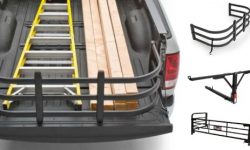
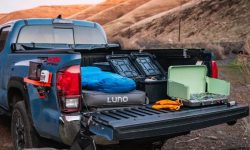
- The Gear Shuffle: If you sleep in the bed, you have to share that space with your gear. Often, this means moving plastic bins or coolers out into the front seat or onto the ground every single night before bed.
- Lack of Headroom: Unless you buy a high-rise “grandpa cap,” you will not be able to sit up straight in bed. Getting dressed in a confined truck bed requires awkward yoga moves.
- Dust Intrusion: Truck tailgates are notoriously bad at sealing out dust. After a long day on a dry dirt trail, you might find your sleeping bag covered in a fine layer of silt if you haven’t properly sealed your tailgate gaps.
Final Verdict: Which One Should You Buy?
There is no universal “best” option. The right choice depends entirely on your specific travel style.
You should buy a Roof Top Tent if: You travel with a partner or kids (RTTs offer much larger mattresses), you primarily camp in warm weather, and you do not care about urban stealth camping. It is the ultimate fair-weather adventure setup.
You should buy a Truck Bed Cap if: You travel solo or as a couple who doesn’t mind a snug space, you plan on doing a lot of winter or bad-weather camping, and you want the ultimate freedom to stealth camp in cities and parking lots.
Build the setup that fits your lifestyle, pack your gear, and stay wild.