Alright, fellow adventurers and survivalists, let’s talk about something absolutely non-negotiable when you’re out there pushing limits in the backcountry: water. Not just any water, mind you, but clean, safe drinking water. I’ve seen enough rookies make critical mistakes, and believe me, a bad gut feeling from contaminated water isn’t just uncomfortable – it can be deadly. That’s why knowing how to purify water in the wild reliable methods isn’t just a skill; it’s a fundamental pillar of outdoor survival.
As someone who’s spent more nights under the stars than in a bed, from the scorching deserts of Arizona to the frigid peaks of the Rockies, I can tell you that access to potable water is often the single biggest challenge. You can go a while without food, but without water? Your clock starts ticking fast. So, let’s dive deep into the tried-and-true, battle-tested methods that will keep you hydrated and healthy, no matter how remote your adventure takes you.
Why Water Purification is Your Top Priority
You might look at a crystal-clear mountain stream and think, “Looks good to me!” And while it might look pristine, don’t let its appearance fool you. That water can be teeming with microscopic villains: bacteria like E. coli, protozoa such as Giardia and Cryptosporidium, and even viruses. These invisible enemies can turn your epic wilderness trip into a miserable, dehydrating nightmare of cramps, vomiting, and diarrhea. In a survival situation, that’s a death sentence. Proper purification eliminates these threats, making your water safe to drink.
The Gold Standard: Boiling Water
When it comes to foolproof methods, boiling reigns supreme. It’s ancient, it’s simple, and it’s incredibly effective against all common pathogens, including bacteria, viruses, and protozoa. If you can build a fire and have a metal container, you can purify water.
How to Boil Water Effectively:
- Collect Your Water: Try to gather the clearest water available. If it’s murky, pre-filter it through a cloth (like a bandana or shirt) to remove larger particulates. This isn’t purification, but it makes the boiling more effective and the water more palatable.
- Bring to a Rolling Boil: Place your water in a pot, canteen cup, or any heat-safe container over a fire or stove. Once it reaches a vigorous, rolling boil, let it continue for at least one minute. At elevations above 6,500 feet (2,000 meters), boil for three minutes to compensate for the lower boiling point.
- Cool and Store: Let the water cool naturally. Don’t try to cool it quickly by adding ice or unpurified water, as this could reintroduce contaminants.
Pros of Boiling:
- 100% Effective: Kills all pathogens.
- Reliable: Doesn’t depend on batteries, chemicals, or filters that can clog.
- Simple: Requires minimal equipment (fire source, container).
Cons of Boiling:
- Time-Consuming: Waiting for water to boil and then cool can take a while.
- Fuel Dependent: Requires a heat source, which might be scarce or difficult to manage in certain environments.
- Logistics: You need a heat-safe container to boil in.
- Taste: Boiled water can sometimes taste flat; you can improve this by pouring it between two clean containers to aerate it.
Modern Marvels: Mechanical Water Filters
For backpacking and hiking, mechanical filters are often my go-to. They’re quick, efficient, and remove most common waterborne pathogens without the need for fuel or chemicals. There’s a huge range out there, but they all work on the same principle: pushing water through a membrane with tiny pores that block contaminants.
Types of Filters and How They Work:
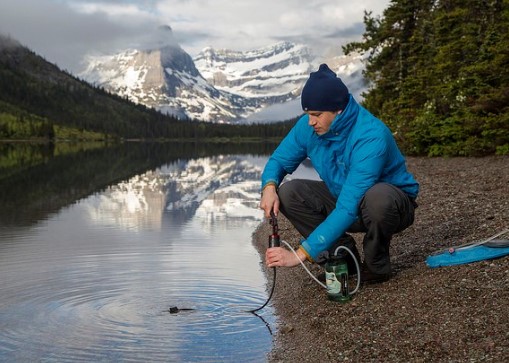
- Pump Filters: These use a hand pump to force water through a filter cartridge. Brands like MSR and Katadyn make excellent ones. They’re robust and allow you to filter water directly into a bottle or hydration reservoir.
- Squeeze Filters: Lightweight and popular, these involve squeezing a soft bottle or bag to push water through the filter. Sawyer Squeeze is the king here. Great for personal use.
- Gravity Filters: Ideal for groups or base camps. You fill a dirty water bag, hang it, and gravity does the work, pushing water through the filter into a clean water bag. Platypus and Sawyer offer great options.
- Bottle Filters: Filters integrated directly into a water bottle, perfect for on-the-go hydration.
Most backcountry filters remove bacteria and protozoa down to 0.1 or 0.2 microns. However, be aware: many standard filters do NOT remove viruses, which are much smaller. If you’re in an area with potential viral contamination (e.g., heavily populated areas, international travel), you’ll need a filter specifically designed to remove viruses (often called a ‘purifier’ rather than a ‘filter’) or combine filtration with chemical treatment.
Pros of Mechanical Filters:
- Speed: Can produce clean water relatively quickly.
- Convenience: No fuel needed, easy to use on the trail.
- Taste: Generally improves water taste by removing sediment.
Cons of Mechanical Filters:
- Clogging: Can clog in murky water, requiring backflushing or cleaning.
- Freezing: If the filter element freezes, it can damage the membrane and make it ineffective. Always keep them from freezing!
- Cost: Initial investment can be higher than other methods.
- Maintenance: Requires cleaning and proper storage.
- Virus Protection: Many don’t remove viruses. Check the specifications carefully.
Chemical Warfare: Purification Tablets and Drops
Chemical treatments are compact, lightweight, and serve as an excellent backup or primary method, especially for killing viruses that filters might miss. They work by releasing active compounds into the water that destroy microorganisms.
Popular Chemical Methods:
- Chlorine Dioxide (e.g., Aquamira, Katadyn Micropur): This is my preferred chemical treatment. It’s effective against bacteria, viruses, and protozoa (including Cryptosporidium, given enough contact time). It also has minimal impact on water taste compared to iodine.
- Iodine Tablets: Older but still effective against bacteria and viruses, and most protozoa (though less effective against Cryptosporidium). The main drawback is the distinct, often unpleasant taste, and it’s not recommended for pregnant women or people with thyroid conditions.
How to Use Chemical Treatments:
- Pre-filter: Again, pre-filter murky water to remove sediment. Chemicals work best in clear water.
- Add Treatment: Follow the manufacturer’s instructions precisely for dosage based on water volume.
- Wait: This is crucial. Most treatments require 30 minutes for bacteria and viruses, but up to 4 hours for Cryptosporidium (check your product’s instructions).
Pros of Chemical Treatments:
- Lightweight & Compact: Easy to carry as a primary or backup.
- Effective: Kills bacteria, viruses, and most protozoa.
- No Freezing Risk: Unlike filters, they aren’t damaged by freezing.
Cons of Chemical Treatments:
- Wait Time: Can be a significant drawback if you need water quickly.
- Taste: Iodine has a strong taste. Chlorine dioxide is better but still noticeable to some.
- Limited Shelf Life: Tablets and drops can lose potency over time, especially after opening.
- Dosing: Requires accurate measurement, which can be tricky in the field.
UV Purification: The Power of Light
UV purifiers, like the SteriPEN, use ultraviolet light to scramble the DNA of microorganisms, rendering them unable to reproduce and thus harmless. They are incredibly effective against bacteria, viruses, and protozoa.
How UV Purifiers Work:
- Clear Water is Key: UV light cannot penetrate murky or cloudy water effectively. You absolutely must pre-filter your water to make it clear before using a UV purifier.
- Submerge and Stir: Dip the UV device into your water bottle and stir until the indicator light signals completion (usually 60-90 seconds for 1 liter).
Pros of UV Purification:
- Speed: Very fast purification once the water is clear.
- Effectiveness: Kills all pathogens, including viruses.
- No Chemicals/Taste: Leaves no residual taste in the water.
Cons of UV Purification:
- Battery Dependent: If your batteries die, you’re out of luck.
- Water Clarity: Ineffective in turbid water, necessitating pre-filtration.
- Fragile: The UV bulb can break if dropped.
- Cost: Higher initial investment.
Emergency & Primitive Methods (Use with Extreme Caution!)
While the methods above are your reliable go-to’s, sometimes you might be caught without your gear. These are last-resort options, and it’s critical to understand their limitations.
Solar Still:
A solar still uses condensation to collect water. You dig a pit, place a container in the center, cover it with plastic sheeting, and weigh down the center with a rock. The sun heats the ground, causing moisture to evaporate, condense on the plastic, and drip into your container. It works, but it’s incredibly slow and yields very little water, especially compared to the effort.
Fabric Filtration (Pre-filtering only):
Layering cloth, sand, and charcoal in a makeshift filter might remove some sediment, but it does NOT purify water. It’s a pre-filter at best. You still need to boil or chemically treat this water to make it safe.
My advice? Don’t rely on these. They are for dire emergencies when all other reliable methods have failed. Always prioritize carrying proper purification equipment.
Combining Methods for Ultimate Safety
The smartest approach to water purification in the wild is often a layered one. For instance, I frequently carry a mechanical filter (like a Sawyer Squeeze) for my primary hydration and a small bottle of chlorine dioxide drops as a backup and for treating water when I suspect viral contamination. If I’m setting up a longer camp, a gravity filter combined with boiling for cooking water is a fantastic combo.
Think of it like this: your primary method handles 90% of your needs, and your backup handles the other 10% or unexpected situations. This redundancy is a cornerstone of smart wilderness preparedness.
What NOT to Do: Common Mistakes
- Drinking from “Clear” Sources: As mentioned, clear doesn’t mean clean.
- Filtering without Purifying: If your filter doesn’t remove viruses, you’re still at risk in certain areas.
- Trusting “Natural” Filters: Running water through sand and gravel will improve clarity but won’t remove pathogens.
- Ignoring Contact Times: Chemical treatments need their full wait time to be effective.
- Assuming Rainwater is Always Safe: While generally cleaner, rainwater can pick up contaminants from leaves, roofs, or atmospheric pollution. If collecting from an unknown surface, treat it.
Choosing Your Water Purification Arsenal
When you’re deciding on your gear for how to purify water in the wild reliable methods, consider these factors:
- Trip Length & Group Size: Longer trips and more people mean higher water demands. Gravity filters are great for groups, personal filters for solo trips.
- Water Sources: Are you expecting clear mountain streams or murky desert puddles? This influences filter choice and the need for pre-filtration.
- Weight & Bulk: Backpackers prioritize lightweight, compact options.
- Speed vs. Effectiveness: How quickly do you need water? Are you willing to wait for chemicals or boiling?
- Budget: There’s a range of prices for all methods, but don’t skimp on something so vital.
Frequently Asked Questions About Water Purification
How long do I need to boil water to purify it?
For most elevations, a vigorous rolling boil for at least one minute is sufficient. Above 6,500 feet (2,000 meters), boil for three minutes to ensure all pathogens are destroyed due to the lower boiling point at higher altitudes.
Can I drink rainwater without purification?
While rainwater is generally much cleaner than surface water, it’s not sterile. If collected directly into a clean container from the sky, it’s usually safe. However, if it runs off leaves, a tarp, or other surfaces, it can pick up contaminants. It’s always safest to purify rainwater if you have any doubts about its collection method or the cleanliness of the collection surface.
Are all water filters the same?
Absolutely not. Filters vary widely in their pore size, flow rate, durability, and most importantly, what pathogens they remove. Most backpacking filters remove bacteria and protozoa (0.1-0.2 microns). However, many do not remove viruses, which are much smaller. Always check the manufacturer’s specifications to understand what your filter is designed to remove. Filters that remove viruses are often called ‘purifiers’.
What’s the best method for taste?
Boiling can leave water tasting flat, but aerating it (pouring it back and forth between clean containers) can help. Mechanical filters generally improve taste by removing sediment. UV purifiers leave no taste. Chemical treatments, especially iodine, can leave a distinct taste, though chlorine dioxide is much milder. If taste is a major concern, a good mechanical filter or UV purifier is often preferred.
How much water should I carry/purify per day?
This varies significantly based on activity level, temperature, humidity, and individual physiology. A general guideline for moderate activity in temperate conditions is 1 liter every 2-4 hours, or roughly 3-4 liters per person per day. In hot weather or during strenuous activity, you might need 6-8 liters or even more. Always err on the side of having more than enough, and plan your water sources carefully.
The Bottom Line: Prepare, Practice, Survive
Mastering how to purify water in the wild reliable methods isn’t just about survival; it’s about confidence, comfort, and pushing your boundaries further into the wilderness. Don’t wait until you’re parched and desperate to figure this out. Get your gear, test it out on local hikes, and become proficient with your chosen methods.
The wild is an incredible place, but it demands respect and preparation. By understanding and implementing these reliable water purification techniques, you’ll be well on your way to a safer, more enjoyable, and truly WildRigged adventure. Stay hydrated, stay safe, and I’ll see you out there!